Drone and aerial power line inspections use unmanned aircraft equipped with high-resolution and thermal cameras to visually inspect transmission and distribution lines, poles, towers, and equipment without requiring crews to physically climb structures or de-energize lines. They identify wear, corrosion, vegetation encroachment, and hardware damage faster, more safely, and often more thoroughly than ground-based inspection alone.
For utilities, renewable energy operators, and infrastructure owners, regular aerial inspection is one of the most effective ways to catch problems before they cause outages or safety incidents.
How Drone Power Line Inspection Works
A typical aerial inspection follows a structured process:
- Flight planning — the inspection route is mapped along the line corridor, accounting for airspace restrictions, terrain, and weather
- Data capture — drones fly the corridor capturing high-resolution photo and video, and often thermal imaging, of conductors, insulators, hardware, poles, and towers
- Data review — captured imagery is reviewed (often assisted by analysis software) to flag anomalies like cracked insulators, damaged conductors, corrosion, or vegetation too close to the line
- Reporting — findings are compiled into a report with GPS-tagged locations, prioritized by severity, so maintenance crews know exactly what needs attention and where
Why Aerial Inspection Matters
Safety: Traditional pole-climbing or bucket-truck inspections put crews at height near energized equipment. Aerial inspection removes much of that exposure.
Speed: A drone can cover miles of transmission corridor in a fraction of the time a ground crew would need, especially across difficult terrain.
Thoroughness: Thermal imaging can detect overheating connections and equipment stress that isn’t visible to the naked eye, catching problems before they cause a failure.
Reduced downtime: Because aerial inspection doesn’t typically require de-energizing the line, it can often be performed without interrupting service.
What Aerial Inspections Can Detect
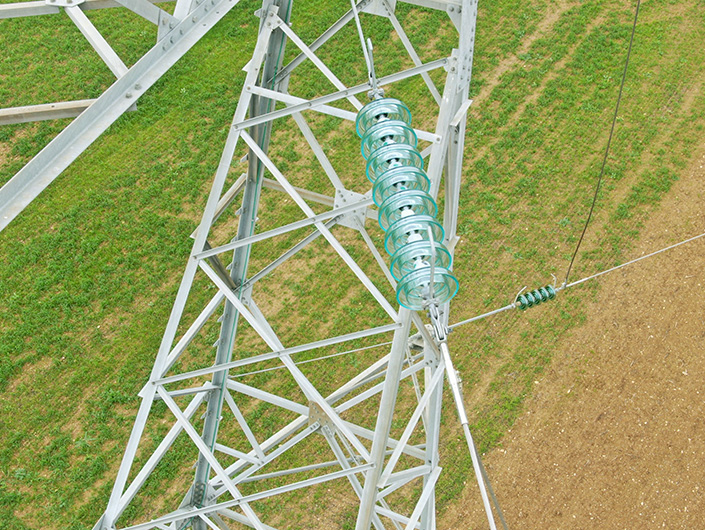
- Damaged or cracked insulators
- Corroded or worn hardware and connectors
- Conductor sag, damage, or wear
- Vegetation encroachment near lines
- Structural issues with poles or towers
- Thermal hot spots indicating overloaded or failing connections
When Should You Schedule an Aerial Inspection?
Most utilities and infrastructure owners schedule routine aerial inspections on a recurring basis (commonly annually) as part of a broader preventive maintenance program, with additional inspections after major storms, wildfires, or other events that could have damaged the line corridor.

FAQ
How is drone inspection different from traditional line inspection? Traditional inspection relies on ground crews, bucket trucks, or helicopter flyovers, often requiring line de-energization or physical access to structures. Drone inspection captures the same visual and thermal data remotely, generally faster, more safely, and at lower cost.
Can drone inspections replace physical maintenance crews entirely? No. Aerial inspection identifies where issues exist, but repairs and hands-on maintenance still require qualified line crews. Aerial inspection makes maintenance programs more targeted and efficient rather than replacing them.
How often should transmission lines be inspected? This depends on utility requirements, line criticality, and local conditions like wildfire risk, but annual inspection is a common baseline, with additional inspections following major storms or other events.