Engineering, Procurement, and Construction (EPC) delivery models are reshaping how utilities approach grid expansion and modernization. But with the increased efficiency and streamlined timelines that design-build offers comes the critical responsibility of ensuring every phase meets—or exceeds—utility safety and performance standards.
As an EPC project director, your role is to bridge the gap between construction speed and regulatory alignment. That requires a sharp understanding of utility specifications, environmental codes, QA/QC requirements, and most of all—how to embed safety across design, procurement, and field execution.
Why Design-Build Requires More Coordination, Not Less
EPC delivery accelerates timelines by consolidating responsibilities. One team handles design, materials, permitting, and construction, reducing delays caused by handoffs between firms. But this integration can also introduce risk if processes aren’t aligned with utility expectations from day one.
To mitigate that risk, project leads must prioritize early design reviews with the utility to confirm alignment. Specification mapping should address conductor types, pole spacing, grounding, and clearance requirements. Strong documentation chains are needed to track submittals, revisions, and as-builts, while procurement standards must ensure the use of utility-grade materials and allow for lead-time buffers. Studies have shown that design-build delivery can reduce overall project timelines by up to 30 percent compared to traditional methods, but only when compliance processes are embedded from the start.
Embedding Safety from Design to Energization
One of the biggest advantages of EPC is the ability to embed safety into every step of the project lifecycle. This means designing with protective clearances, especially near roadways or pedestrian areas, and selecting materials rated for local weather and fire risk profiles. It also includes building constructability into the design so that field crews do not encounter unexpected obstacles, and ensuring environmental plans are incorporated into permitting from the start rather than added later. Meeting EPC project delivery safety goals is not just about jobsite performance—it’s about creating safe outcomes from the first line on the drawing board to final energization.
Maintaining Utility Standards Without Red Tape
Utilities depend on standardization to ensure long-term reliability and maintenance efficiency. EPC teams must match this consistency while maintaining agility. Achieving this requires pre-aligning specifications with regional utility standards such as those used by PG&E, SCE, or SMUD. It also means using approved vendor lists to streamline procurement, submitting constructability reviews before mobilization, and documenting all changes in formats preferred by the utility. By embedding utility standards directly into the design phase, EPC teams reduce RFIs, field change orders, and last-minute compliance adjustments.
A recent California transmission upgrade highlights the importance of this approach. By aligning specifications with utility standards early in the design-build process, the EPC team reduced field change orders by nearly 40 percent, saving both time and rework costs while delivering a safer, more reliable system.
The Role of Communication and QA/QC
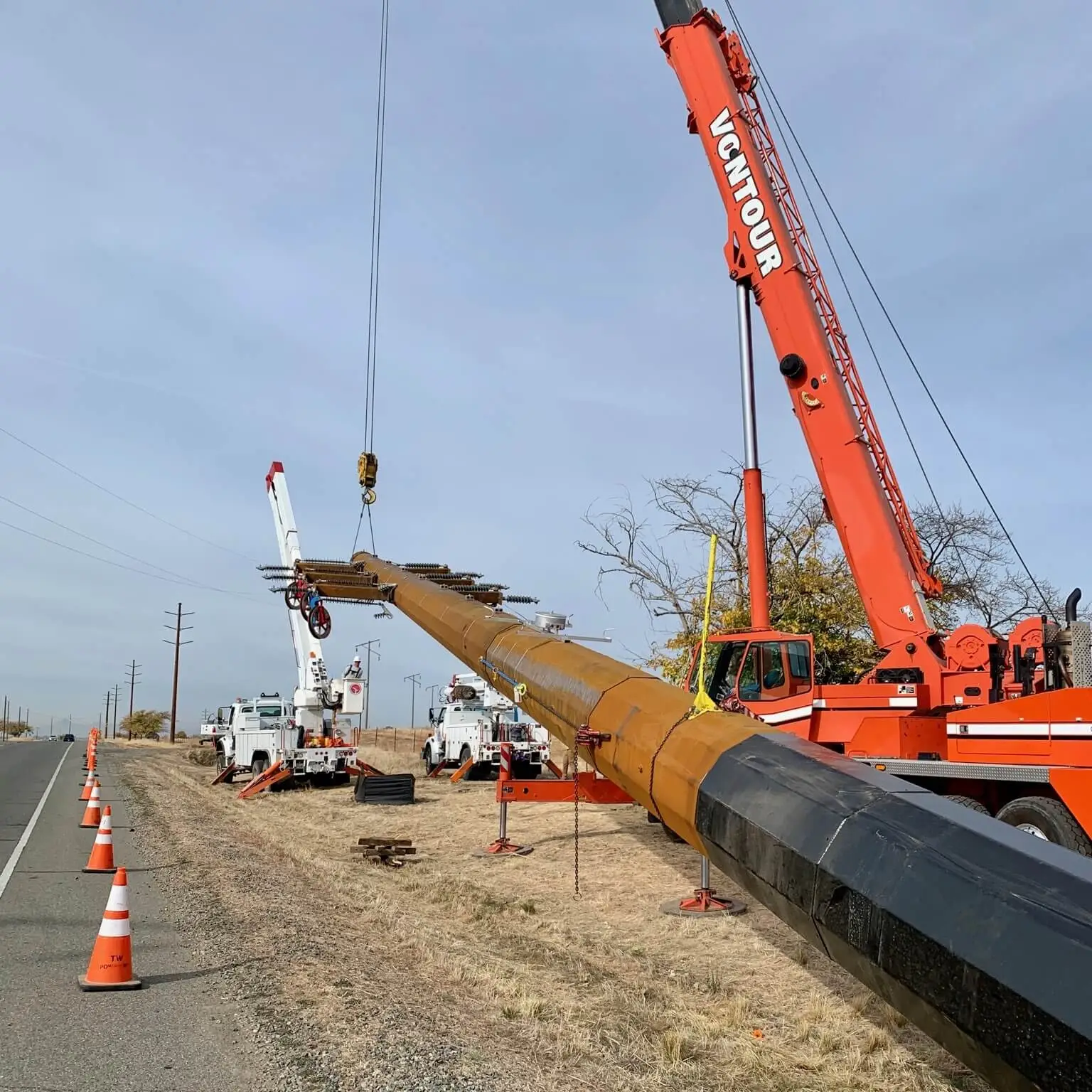
Fast-moving EPC projects require rigorous checks and continuous feedback loops. Field-engineering audits should be conducted during pole setting or trenching, while daily safety meetings keep foremen and subcontractors aligned. Inspection protocols covering foundation depth, guying, torque, and terminations must be consistently applied. Digital QA/QC checklists help track progress and resolve punch list items quickly. These quality controls ensure that final deliverables are not only delivered on time but also to the highest standard of reliability and safety.
Delivering Confidence Through Turnkey Solutions
Clients choose turnkey EPC services because they want confidence that timelines will be met, specifications will be followed, and systems will perform reliably on day one. At TW Powerline, we deliver that confidence by assigning experienced project directors who understand utility workflows, standardizing crew safety protocols across job types and regions, maintaining deep vendor networks for material availability and cost control, and running permitting and construction readiness on parallel tracks. From substation interconnects to high-voltage distribution, our teams align every EPC phase with utility-grade performance.
Final Thoughts
Design-build doesn’t mean cutting corners—it means controlling every variable to meet client goals without compromising standards. For utility leaders, EPC represents a faster path to infrastructure that works. For EPC teams, it is an opportunity to prove that speed and safety can go hand in hand.
With utilities under pressure to modernize the grid quickly while managing costs, the stakes are higher than ever. Choosing the right EPC partner can make the difference between projects that struggle to meet compliance and those that set new standards for performance and reliability.
Need an EPC partner with proven experience? Contact TW Powerline to see how our team brings alignment, efficiency, and compliance to every phase of your project.