As demand for clean energy accelerates, utilities and developers are racing to bring new renewable generation online. Solar, wind, and battery storage projects are being built at a record pace, but no matter how advanced the technology or how ideal the site, these systems are only as effective as their ability to connect to the grid. That’s where gen-tie lines come in.
For engineering, procurement, and construction (EPC) teams, integrating renewable generation tie-ins into existing infrastructure poses both opportunities and technical challenges. From permitting to power flow optimization, a successful gen-tie solution requires careful planning, deep utility coordination, and the ability to deliver results within tight development timelines.
What Is a Gen-Tie Line?
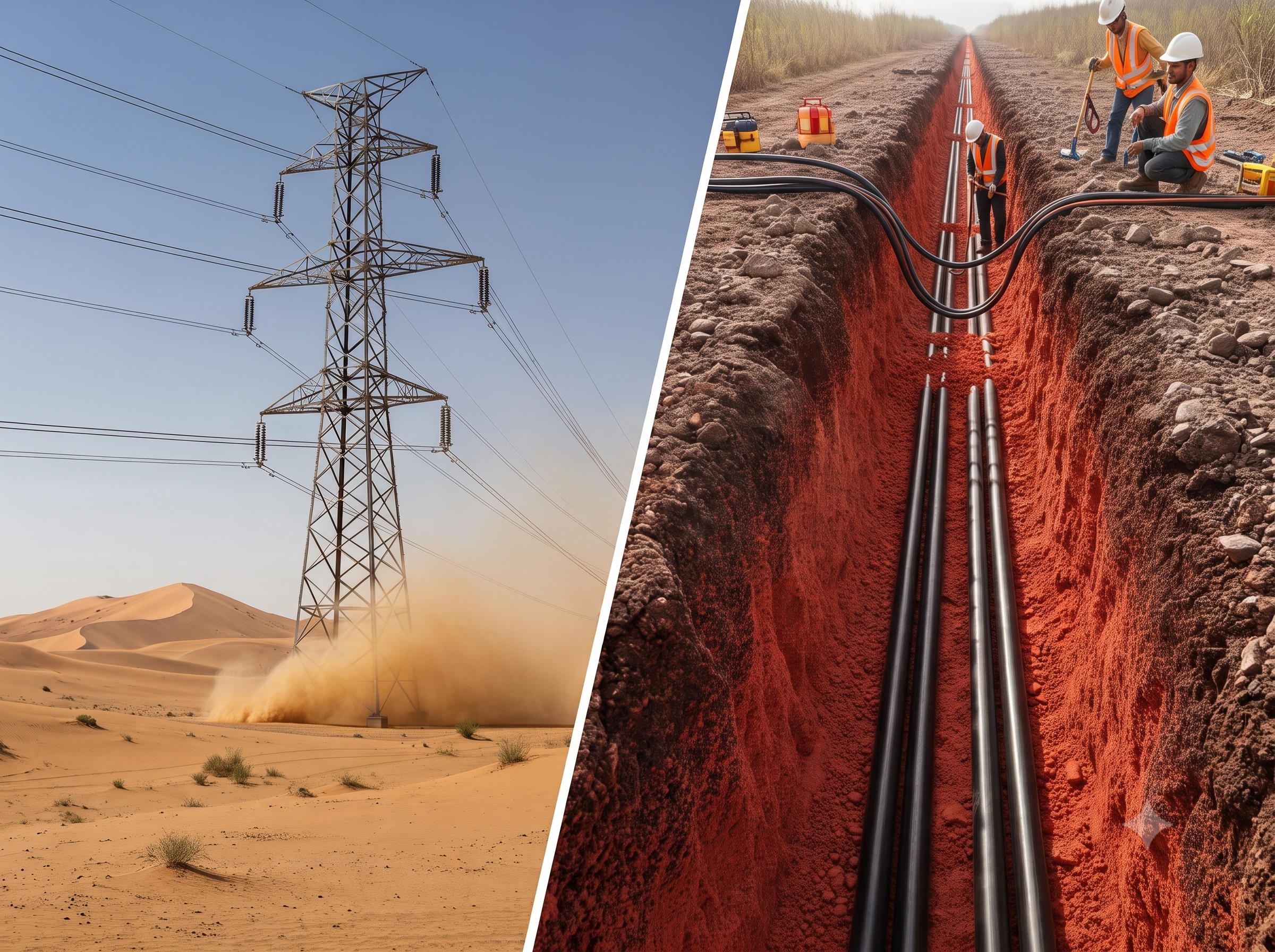
A gen-tie line, or generation tie-in, is the transmission connection between a renewable energy project and the utility grid. It may span anywhere from a few hundred feet to several miles, and often traverses both public and private lands. Gen-tie lines typically carry medium to high voltage power from the renewable energy plant to a point of interconnection (POI), such as a substation or utility-owned line.
Challenges in Integrating Renewable Gen-Ties
Unlike standard powerline extensions, renewable gen-ties come with added complexity:
1. Grid Compatibility and Voltage Matching
Before anything is built, EPC teams must confirm the compatibility of the renewable plant with the grid infrastructure it’s connecting to. Voltage step-up, system protection coordination, and synchronization are crucial.
2. Right-of-Way and Permitting
Land acquisition for gen-ties can be time-consuming, particularly when multiple jurisdictions are involved. Teams need to manage easements, environmental studies, cultural reviews, and agency coordination—often all within tight permitting windows.
3. Construction Timing and Project Sync
Renewable developers often work on compressed schedules to meet tax incentive deadlines or utility procurement agreements. The gen-tie line must be built in parallel with generation assets to prevent costly project delays.
4. System Reliability and Grid Stability
Improperly integrated gen-tie lines can lead to reverse power flow issues, harmonic distortion, or voltage instability, especially in rural or aging grid areas. Early collaboration with utility planning teams is critical to avoid these pitfalls.
The Role of EPC Teams in Gen-Tie Delivery
EPC firms that specialize in energy infrastructure are uniquely positioned to lead gen-tie integration efforts. From early-stage engineering through final commissioning, EPC teams provide critical coordination across civil, structural, electrical, and regulatory disciplines.
Key responsibilities include:
- Feasibility studies and route selection
- Substation interconnection design and relay coordination
- Material procurement and construction logistics
- Environmental compliance and field inspections
- Final energization and testing in partnership with the utility
Because gen-ties are not always considered part of the utility grid, developers often rely on EPC partners to manage these assets independently, while still meeting utility standards.
Why Turnkey Solutions Streamline Gen-Tie Integration
For developers and asset owners, turnkey EPC services offer a clear advantage in gen-tie delivery. A single contractor managing engineering, permitting, procurement, and construction helps:
- Reduce coordination errors between vendors
- Shorten project timelines
- Improve budget control
- Ensure regulatory and utility compliance
TW Powerline has extensive experience delivering end-to-end gen-tie projects, particularly in the renewables space. Our multidisciplinary teams understand how to bridge the gap between private development and utility interconnection standards.
TW Powerline’s Approach to Renewable Energy Gen-Ties
At TW Powerline, our renewable energy gen-tie services are built around collaboration, speed, and precision—ensuring that solar, wind, and storage projects connect to the grid seamlessly and reliably.
From solar PV to wind farms and battery storage projects, TW Powerline has supported dozens of renewable developers with comprehensive gen-tie solutions. Our team combines technical expertise with utility collaboration to:
- Secure right-of-way access with minimal delay
- Engineer safe, scalable designs for multiple voltage classes
- Deliver on tight deadlines driven by energy procurement and PPA schedules
- Manage utility inspections and final energization
Whether your project requires crossing complex terrain, working in protected habitats, or meeting aggressive timelines, TW Powerline brings the tools and talent to get it done.
Career Opportunities in Gen-Tie and EPC Work
Gen-tie projects represent one of the fastest-growing segments in utility infrastructure, and a dynamic opportunity for engineers and field professionals.
TW Powerline offers career paths in:
- Transmission and substation design
- Field construction supervision
- Environmental compliance
- Project management and QA/QC
We also provide training in interconnection standards, protection engineering, and renewable system integration. For professionals looking to work at the intersection of clean energy and power infrastructure, gen-tie projects are a rewarding place to grow.
Final Thoughts
As renewable energy scales up, gen-tie lines are the vital link between clean generation and grid reliability. Delivering these connections quickly, safely, and efficiently requires experienced EPC teams who understand the technical and logistical nuances of grid integration.
TW Powerline is proud to support the energy transition with scalable, code-compliant gen-tie solutions that help projects succeed—from blueprint to commissioning.
Have a renewable project that needs expert gen-tie support? Contact TW Powerline today to discuss how we can deliver on your goals.
Interested in building the grid of the future? Explore career opportunities with our EPC team and join a workforce driving clean energy progress.